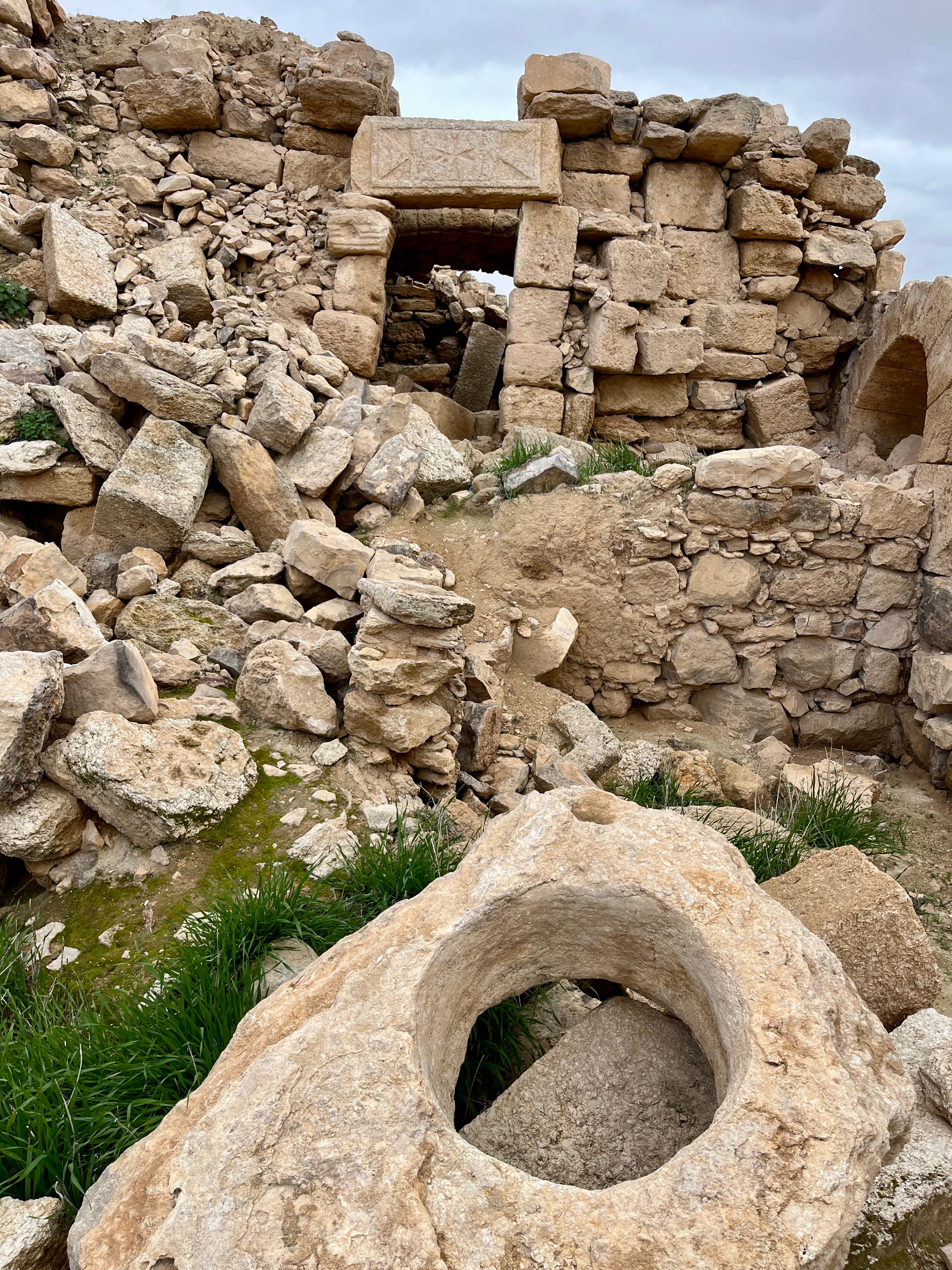
We had the privilege of exploring some parts of Jordan recently that were new to us, despite having traveled here extensively. Pilgrimage is an ancient tradition and spiritual practice, though driving there in a car doesn’t quite have the same effect as long months of walking in the desert and wanting for food and water!
Um al-Rasas (ancient Kastron Mefaa, later Mayfa‘ah) is associated with the biblical settlement of Mephaat mentioned in the Book of Jeremiah and was likely an early Roman military garrison in the province of Arabia. It is now a UNESCO World Heritage Site and a beautifully preserved example of mosaic art. Strikingly, it is also quiet, desolate, and nearly abandoned to time.
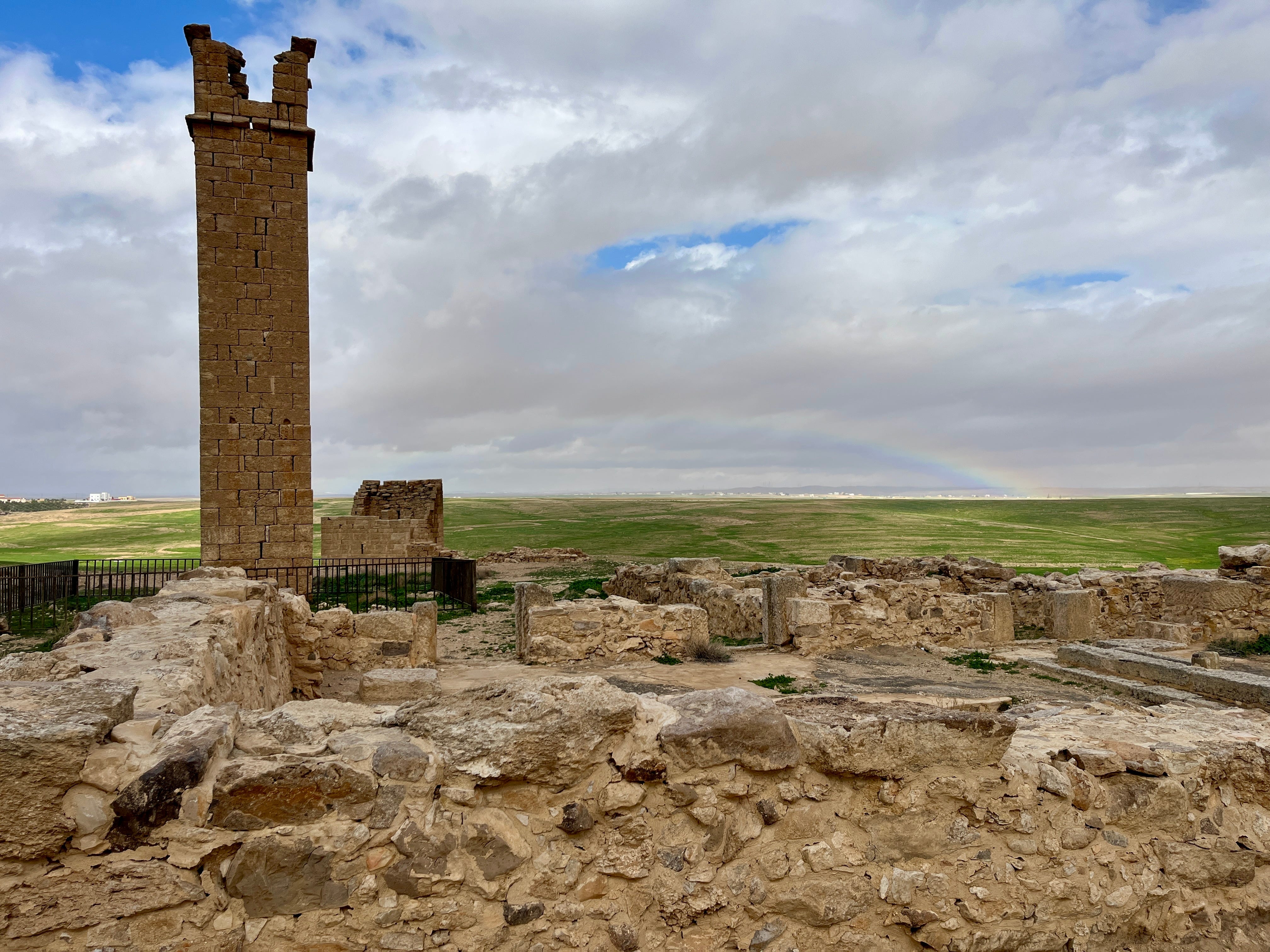
Located on the desert plateau southeast of Madaba in the biblical land of Moab, it stands as one of Jordan’s most compelling witnesses to early Christianity. The site contains the ruins of at least sixteen Byzantine churches, remarkable mosaic floors, and a 14-meter stylite tower, one of the best-preserved examples of this unique kind of early monasticism in the world. Together, these ruins portray the spiritual landscape of the region: a story of pilgrimage, worship and radical devotion.
Jordan was an integral part of the Christian world from the beginning. The oldest purpose built church is located in Aqaba just a few hours south of here. Pilgrimage to the Holy Land surged after Constantine legalized the faith in the 4th century. Churches were built and believers traveled to Jerusalem, Bethlehem, and the Mount of Olives to walk where Jesus walked. Pilgrimage was understood as an act of penance, devotion, and spiritual renewal. It was a way to seek forgiveness, encounter sacred history, and draw nearer to God. It also transformed society. Trade routes flourished, inns and markets developed, and rulers invested in churches and shrines that unified people across regions. Um al-Rasas lay along these networks, linking Arabia with the Holy Land and Syria and providing housing, food and medical care for travelers.
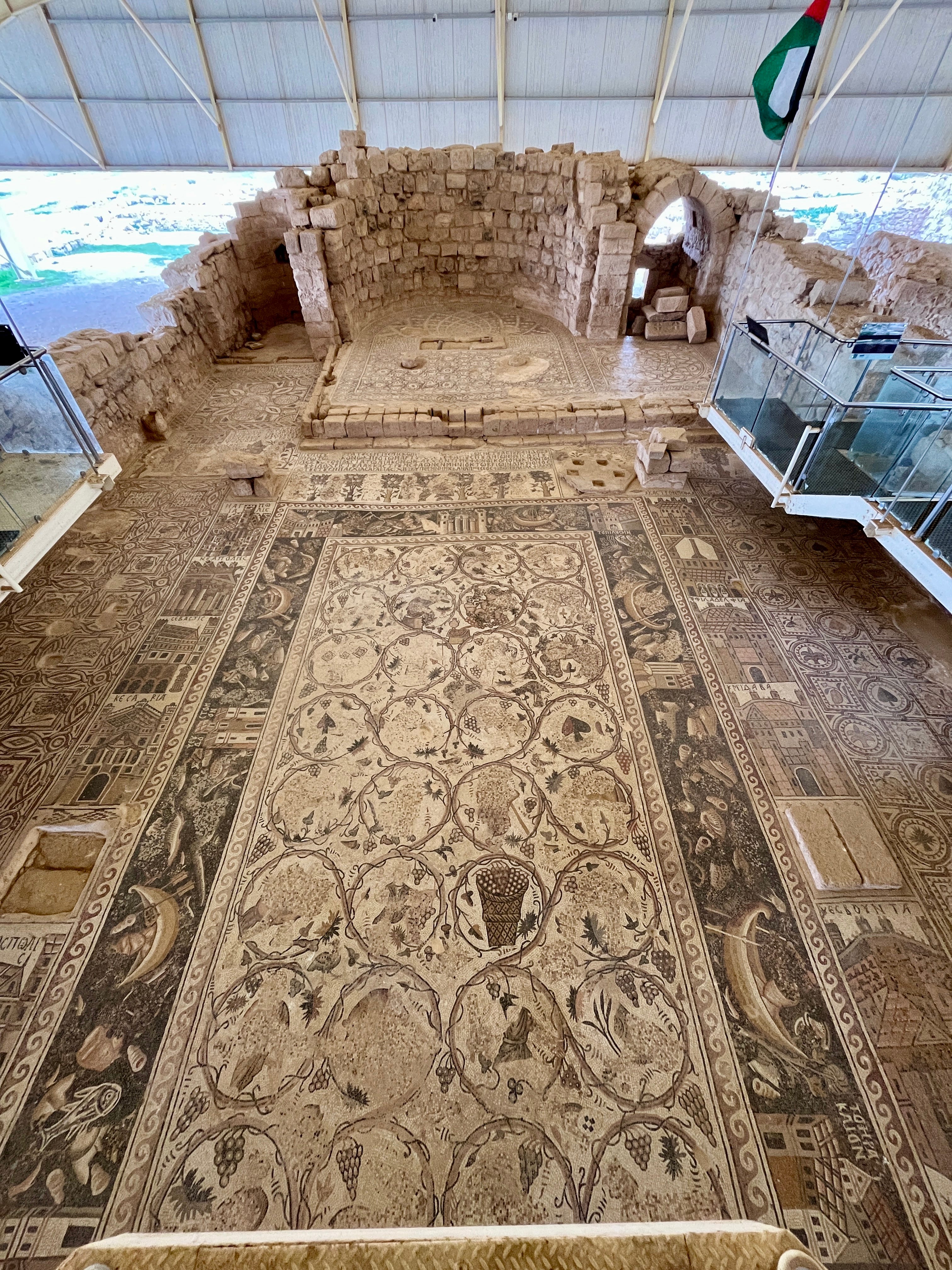
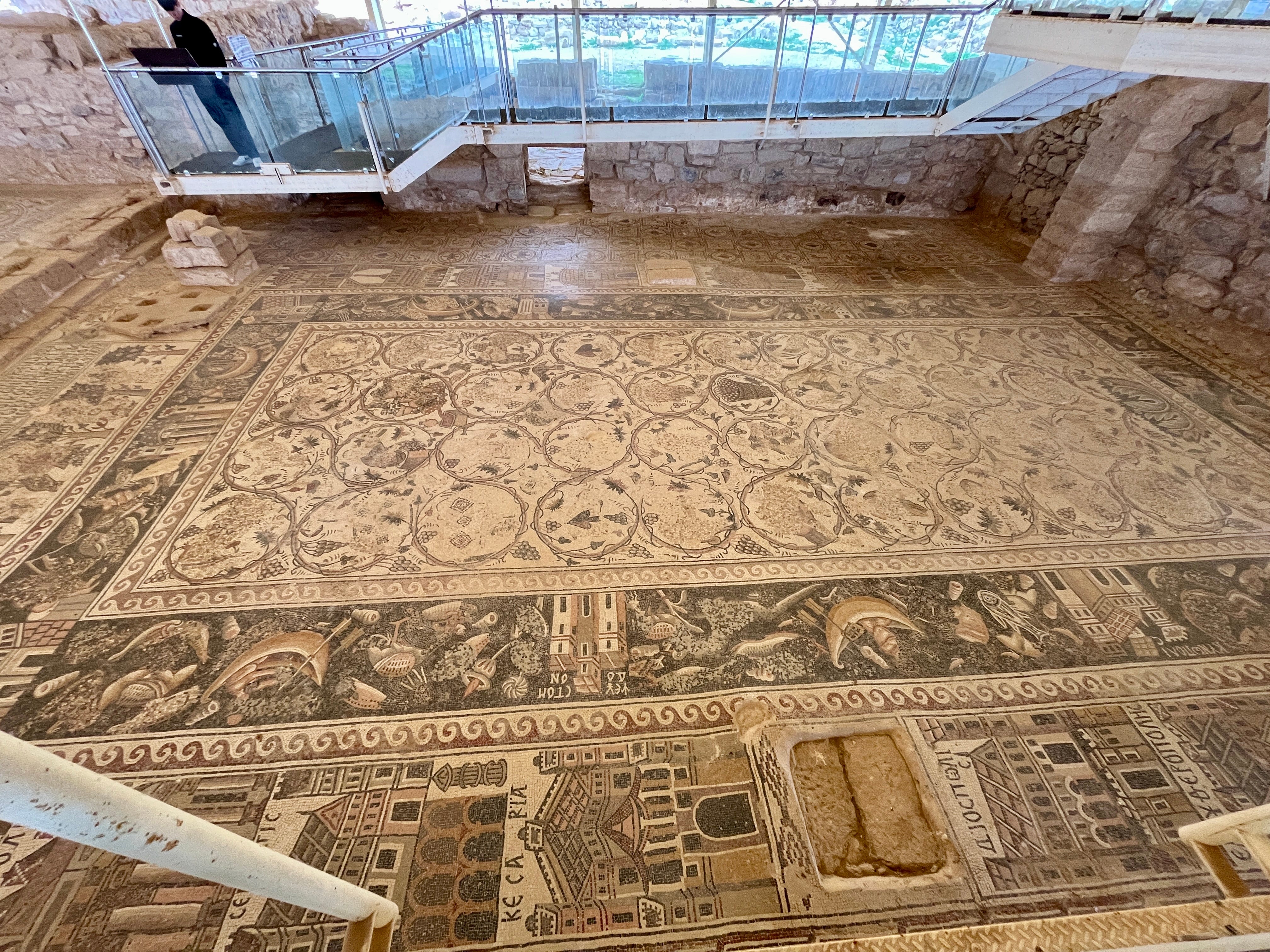
The mosaics of the site reveal this interconnected world. The famous mosaic in the Church of St. Stephen (dated 785 AD — well into the early Islamic period) depicts cities across Palestine, Jordan, and Egypt. Even after the Muslim conquests of the seventh century, Christianity remained deeply rooted in the Madaba region. Churches continued to function, and artistic production persisted. Madaba is still world-famous for mosaic art tradition. The endurance of these communities challenges modern assumptions about abrupt religious decline and instead points to continuity, adaptation, and coexistence. Pilgrimage continued well into the 12th century and the Christian communities of the Madaba region today trace their lineage back to this time.
After persecution ended and the faith became socially acceptable, many believers feared the church was losing its spiritual intensity as leaders became part of the power structures and politics of their world. Early monasticism emerged as a radical response to Christianity’s secularization and the politicization of church power structures. Since martyrdom was no longer a state threat, and there were significant material benefits to clergymen, corruption and excess became commonplace. The answer for some was the desert. Inspired by biblical models such as John the Baptist and even Jesus’ own retreat to the wilderness, men and women withdrew from cities to pursue lives of prayer, poverty, and fasting. Figures like St. Anthony of Egypt became known as “athletes of God,” battling temptation and seeking union with Him.
Over time, solitary hermits were joined by organized monastic communities, shaped by leaders like Pachomius and Basil. In Jordan, monasticism flourished in places such as Wadi al-Kharrar (near the Jordan River baptism site), Mount Nebo, Petra, Wadi Rum, and southern Jordan. These communities became centers of hospitality for pilgrims, charity, evangelism, and manuscript preservation. Monks played a significant role in the Christianization of rural populations and Arab tribes across the provinces of Palaestina and Arabia.
Within this broader movement arose stylitism, an extreme form of ascetic devotion most famously embodied by Simeon Stylites in fifth-century Syria. Stylite monks lived atop towers, physically separating themselves from worldly distraction to focus on prayer and preaching. Food and water were lifted to them by rope. Paradoxically, their isolation was a prophetic and attracted crowds. Pilgrims traveled long distances to seek counsel, healing, and blessing from these monks living out radical holiness.
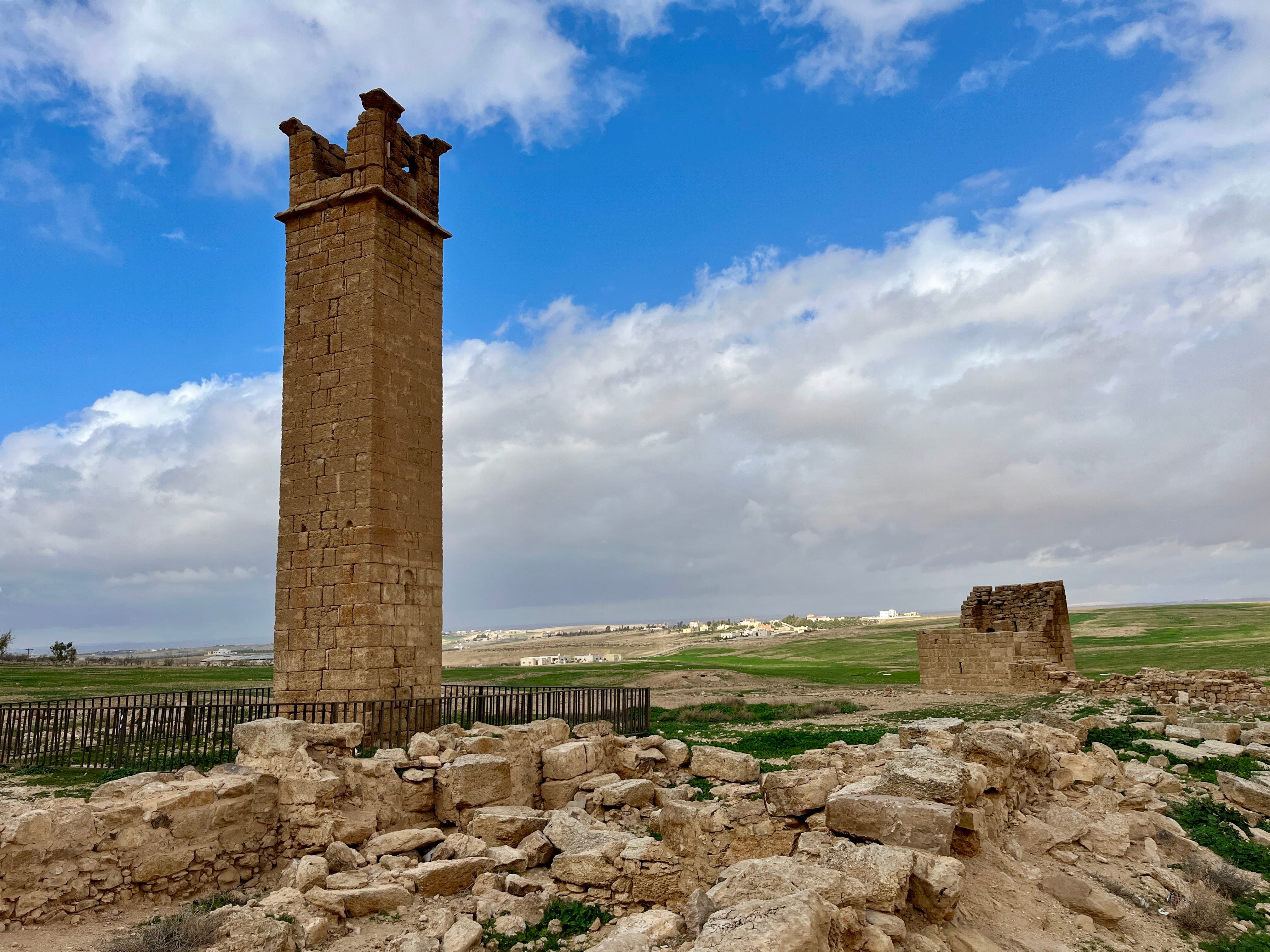
Far from being marginal, stylitism became an accepted expression of devotion between the 5th-9th centuries. The tower at Um al-Rasas stands as a testimony to the lengths (and heights) to which believers would go in pursuit of God.
Um al-Rasas also intersects with interesting early Islamic history. The Sirat al-Rasul recounts that four Arabs from the Quereysh (Mohammad’s tribe) who traveled here seeking answers. These were pre-Islamic ḥanīfiyya — monotheistic seekers following the faith of Abraham who were dissatisfied with Arabian polytheism — and they journeyed through Byzantine lands questioning monks before arriving at Mayfa‘ah. Three of pilgrims who traveled here with Zayd bin Amr bin Nufayl, converted to Christianity. That spiritual seekers came here in addition to Christian pilgrims before Islam’s rise underscores Um al-Rasas’ reputation as a place of serious faith.
For Christians today, Um al-Rasas reminds us that Middle Eastern Christianity is ancient, resilient and prophetic in its history of calling pilgrims to reject materialism and the corruption of politics. Um al Rasas’ mosaics and churches testify to the endurance of faith and a missionary heritage that bore witness to pilgrims, travelers and to Arab desert tribes. However, the church buildings are now in ruins. Sixteen of them. And the mosaics lay under piles of sheep dung and sand for centuries. The church is ultimately not a building, it is a people… and Christians today in the region, perhaps even you and I, are the continuation of these churches.
This visit left me wondering what places and mystics and stylites will bear silent witness beneath the sands of time for future generations? Where are the modern mystics and monks bearing prophetic witness to the dangers of materialism and politicization of our 21st century Christianity? What will we leave behind that will, in 1500 years, cause new pilgrims to ponder the continuity of their tradition and faithfulness to Jesus?